Seed Phrase Storage: Steel Plates vs. Paper vs. Metal Backup Compared

Ashir Khan writes about cryptocurrency security, self-custody, macro market analysis, and regulatory policy at CryptoBeacon.
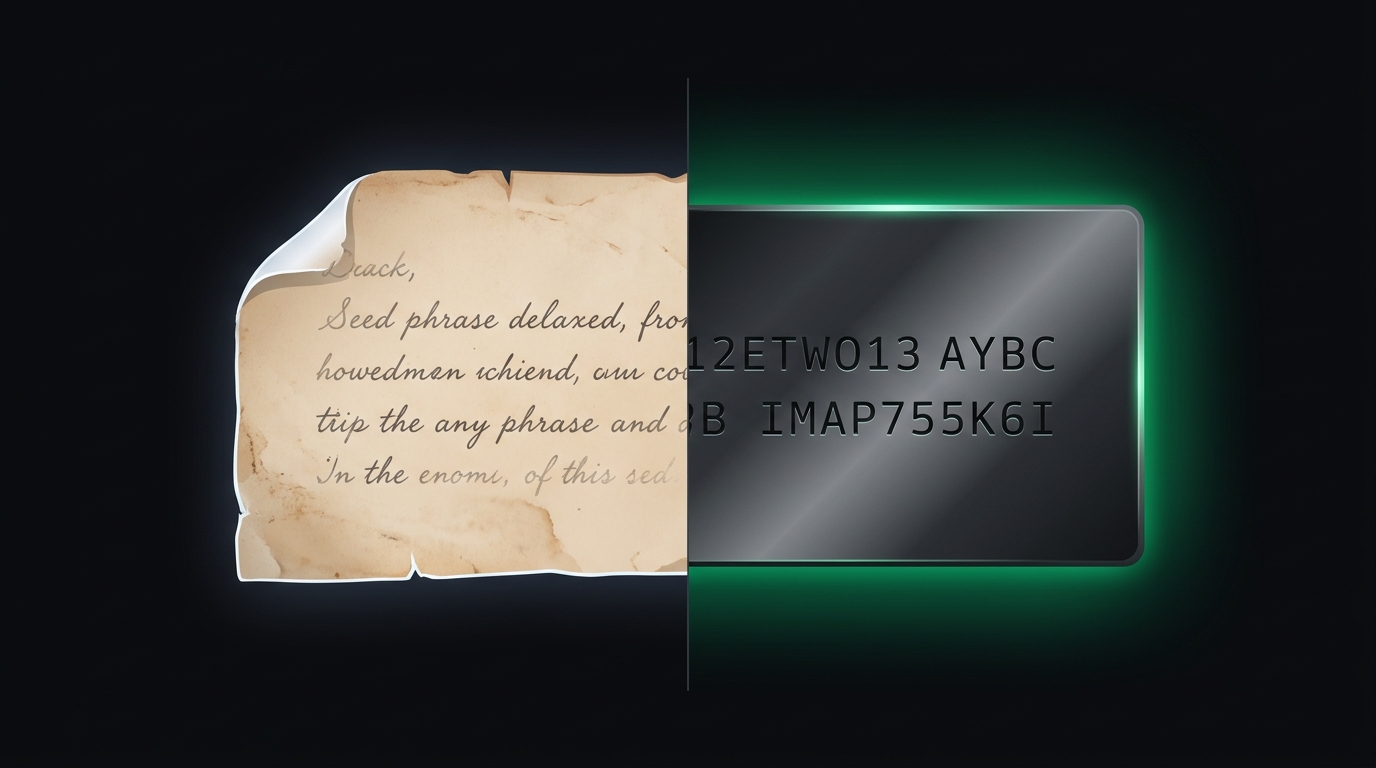
Once you have decided to back up your seed phrase offline — the right call, as covered in our seed phrase storage guide — the next question is which physical medium to actually use. Paper is free and familiar. Metal costs more but survives things paper cannot. This article compares the real categories on durability, cost, and effort, without steering you toward any specific product.
This article is educational. It is not financial advice.
The Three Real Categories
Most physical backup options fall into one of three categories:
- Paper — written or printed by hand.
- DIY metal stamping — you personally stamp letters into a blank metal plate using basic hand tools.
- Commercial metal backup products — pre-made systems (stamped plates, punch-letter tile kits, capsule-and-rod systems) designed specifically for this purpose.
Durability Comparison
| Threat | Paper | DIY Stamped Metal | Commercial Metal Product |
|---|---|---|---|
| Fire | Fails at normal paper-burning temperatures | Withstands typical house-fire temperatures (steel) | Withstands typical house-fire temperatures; some rated for higher/longer exposure |
| Water/flood | Ink runs, paper degrades | Unaffected (stainless steel does not corrode in water) | Unaffected; some include waterproof cases |
| Corrosion over years | N/A (fire/water are bigger risks first) | Minimal with stainless steel; carbon steel can rust | Minimal — reputable products use stainless/marine-grade materials |
| Fading/illegibility | Ink fades, handwriting can smudge | Stamped characters do not fade | Stamped/engraved characters do not fade |
| Physical damage | Tears easily | Steel resists bending; sharp impacts can still dent | Designed for impact resistance; varies by product |
Cost and Effort Comparison
| Paper | DIY Stamped Metal | Commercial Metal Product | |
|---|---|---|---|
| Upfront cost | Essentially free | Low — a blank plate and stamping kit | Moderate to significant, depending on the product |
| Time/effort | Minutes | 30–60 minutes, some hand strength required | Minutes to assemble (punch-tile kits) or similar effort to DIY stamping |
| Skill required | None | Low — steady hands help | None to low, depending on design |
| Best suited for | Small, short-term amounts you will upgrade soon | Anyone comfortable with basic manual effort, wanting durability without extra cost | Anyone wanting a polished, purpose-built solution and willing to pay for convenience |
What Actually Matters Most: Matching Medium to Stakes
- Small or experimental holdings: paper is a reasonable starting point, but should be treated as temporary rather than a permanent plan.
- Meaningful long-term holdings: metal in some form is worth the modest cost or effort — the failure modes paper cannot survive (fire, water, fading) are exactly the accidents that cause real, irreversible losses.
- DIY vs. commercial: this is almost entirely a convenience decision, not a security one. A carefully DIY-stamped stainless steel plate and a well-made commercial product offer comparable durability. Pay for a commercial product if you want a polished, quick, zero-effort setup; do it yourself if you are comfortable with basic tools and want to save money.
A Few Things That Matter Regardless of Medium
- Multiple copies, multiple locations matters more than which single medium you choose — a single copy of anything is still a single point of failure. This principle applies whether you are using a standard BIP-39 seed phrase or any other wallet backup format. Storing one metal plate in a home safe and another in a bank safety deposit box ensures that even if one location suffers a catastrophic event (like a severe natural disaster or theft), you still have access to your funds. The goal of a secure backup plan is redundancy.
- Test legibility before relying on it. For DIY stamping specifically, do a practice stamp on scrap metal first to confirm your lettering is consistent and readable. Some people find that their first few attempts at stamping metal result in characters that are too shallow, crooked, or overlapping. Taking the time to practice ensures that when you stamp your actual seed phrase, every single word is unambiguous.
- Material matters within the metal category too. Stainless steel resists corrosion far better than plain carbon steel, which can rust over years — check what material any plate (DIY blank or commercial product) is actually made of. Titanium is another excellent option offered by some commercial products due to its extremely high melting point and superior corrosion resistance, though it is usually more expensive. Always avoid cheap metals like aluminum for long-term storage, as its low melting point makes it vulnerable to typical house fires.
- Keep it hidden and secure. While metal plates protect against environmental damage, they do not protect against theft. A fireproof backup does you no good if it is left in plain sight on your desk. Ensure your backup medium is stored in a location that is difficult for casual intruders to find, such as a hidden floor safe or a securely locked document box.
Key Takeaways
- Paper is free and fine for small, temporary holdings, but fails against fire, water, and fading — exactly the accidents that cause permanent loss.
- DIY stamped steel and commercial metal products offer comparable durability; the difference between them is convenience and cost, not security.
- Stainless steel resists corrosion significantly better than carbon steel — material matters within the metal category, not just metal vs. paper.
- Multiple copies in separate locations matter more than which single medium you pick.
Frequently Asked Questions
Is a commercial metal backup product worth the extra cost over DIY stamping?
Not for security — a well-made DIY stamped steel plate and a quality commercial product offer similar durability. The extra cost buys convenience and polish, not additional protection.
Does paper backup ever make sense?
For small or short-term holdings, yes, as a starting point — but it should be treated as temporary given its vulnerability to fire, water, and fading.
What's the difference between stainless steel and regular steel for this purpose?
Stainless steel resists corrosion far better over long time periods. Carbon or regular steel can rust, especially in humid conditions, which can eventually affect legibility.
How many backup copies should I actually make?
There's no universal number, but relying on a single copy of any medium creates a single point of failure — most guidance favors at least two copies in separate physical locations.
Financial Disclaimer
This article is for informational and educational purposes only and should not be considered financial or investment advice. Past performance is not indicative of future results.
This article does not endorse or recommend any specific brand or product.