
Should You Keep Your Crypto on an Exchange or Move It to Your Own Wallet?

Ashir Khan writes about cryptocurrency security, self-custody, macro market analysis, and regulatory policy at CryptoBeacon.
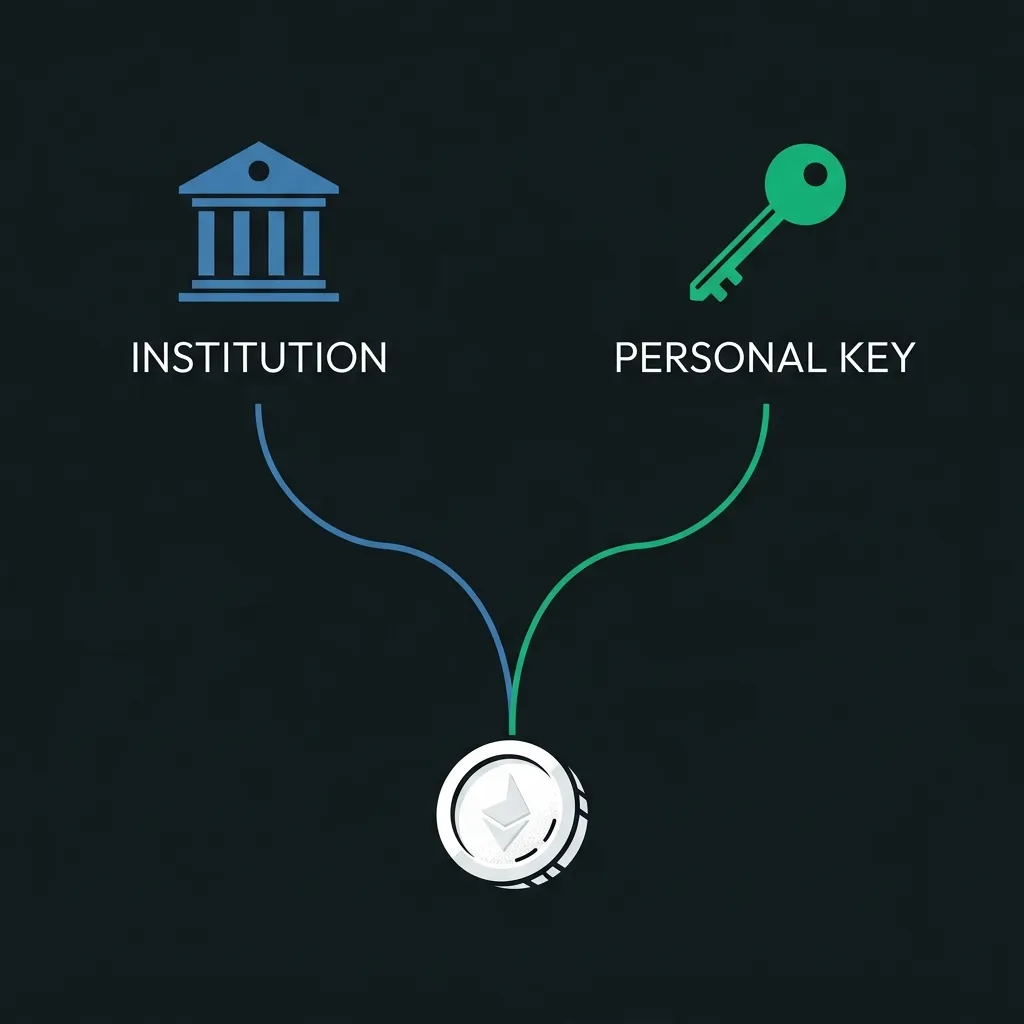
Once you understand that leaving crypto on an exchange means someone else holds the keys (see our explainer on "not your keys, not your coins"), the natural next question is: so what should I actually do? This guide walks through a practical decision framework rather than a one-size-fits-all answer, because the right choice genuinely depends on how you use your crypto.
This article is educational. It isn't financial advice.
1. What You're Actually Choosing Between
This isn't really a choice between two products — it's a choice between two different risk profiles:
Exchange Custody
- Convenient, familiar, easy to trade from
- You're trusting the platform's security, solvency, and continued operation
Personal Wallet Custody
- You control the keys directly
- You're solely responsible for backing up and protecting them, with no company able to help if something goes wrong
Whether holding major cryptocurrencies on large centralized spot venues or using specialized peer-to-peer trading platforms, understanding counterparty risk vs self-custody is critical.
Neither is universally safer. They're safer against different things.
2. When Keeping Crypto on an Exchange Makes Sense
- You're actively trading or plan to sell/rebalance soon, and moving funds back and forth would be impractical.
- You're still new to self-custody and haven't yet built confidence managing a seed phrase safely.
- The amount involved is small enough that the convenience trade-off outweighs the custodial risk, for now.
3. When Moving to Your Own Wallet Makes Sense
- You intend to hold for the long term without frequent trading.
- The amount involved is significant enough that counterparty risk (the platform's own security or solvency) matters more than convenience.
- You've taken the time to understand seed phrase storage and feel confident managing your own backup safely.
4. The Hybrid Approach Most People Land On
Many crypto users don't pick one option exclusively — they keep a smaller, active trading balance on an exchange and move the majority of their long-term holdings to a personalwallet. This mirrors a common real-world pattern: keeping some cash in a checking account for daily spending while keeping savings somewhere less immediately accessible. There's no fixed ratio that's "correct" — it's a matter of matching each portion of your holdings to how you actually intend to use it.
5. A Simple Decision Checklist
Ask yourself:
- Do I plan to trade this soon, or hold it long-term? Frequent trading favors exchange convenience; long-term holding favors self-custody.
- Am I comfortable managing a seed phrase safely? If not yet, that's worth addressing (see our guide to understand seed phrase storage) before moving significant funds off an exchange.
- How would I feel if this specific platform had a serious problem tomorrow? If the answer is "that would be a serious loss," that's a signal to reduce exchange-held exposure.
- Have I tested a small self-custody transfer before moving a large amount? Confirming a wallet works correctly with a test a small self-custody transfer avoids costly mistakes on a larger one.
Custody Quick Reference
Exchange Storage
- Best for small amounts or active trading
- Uses simple username/password and 2FA logins
- Carries counterparty risk (exchange security/solvency)
Personal Wallet
- Best for large, long-term asset custody
- Requires secure storage of physical recovery phrase
- Eliminates third-party risk; full control of keys
Conclusion
There's no single correct answer to "exchange or personal wallet" — there's only the answer that matches how you actually intend to use your crypto and how much counterparty risk you're comfortable carrying. Many people find that a hybrid approach — a small active balance on an exchange, the rest self-custodied — reflects that trade-off well.
Sources
- Bitcoin.org — Securing Your Wallet (self-custody vs. custodial services)
- Bitcoin Wiki — Exchange (how custodial exchanges hold user funds)
- U.S. SEC Investor.gov — Crypto Assets (risks of trading and holding crypto)
Financial Disclaimer
This article is for informational and educational purposes only and should not be considered financial or investment advice. Past performance is not indicative of future results.