How to Send Bitcoin Safely

Ashir Khan writes about cryptocurrency security, self-custody, macro market analysis, and regulatory policy at CryptoBeacon.
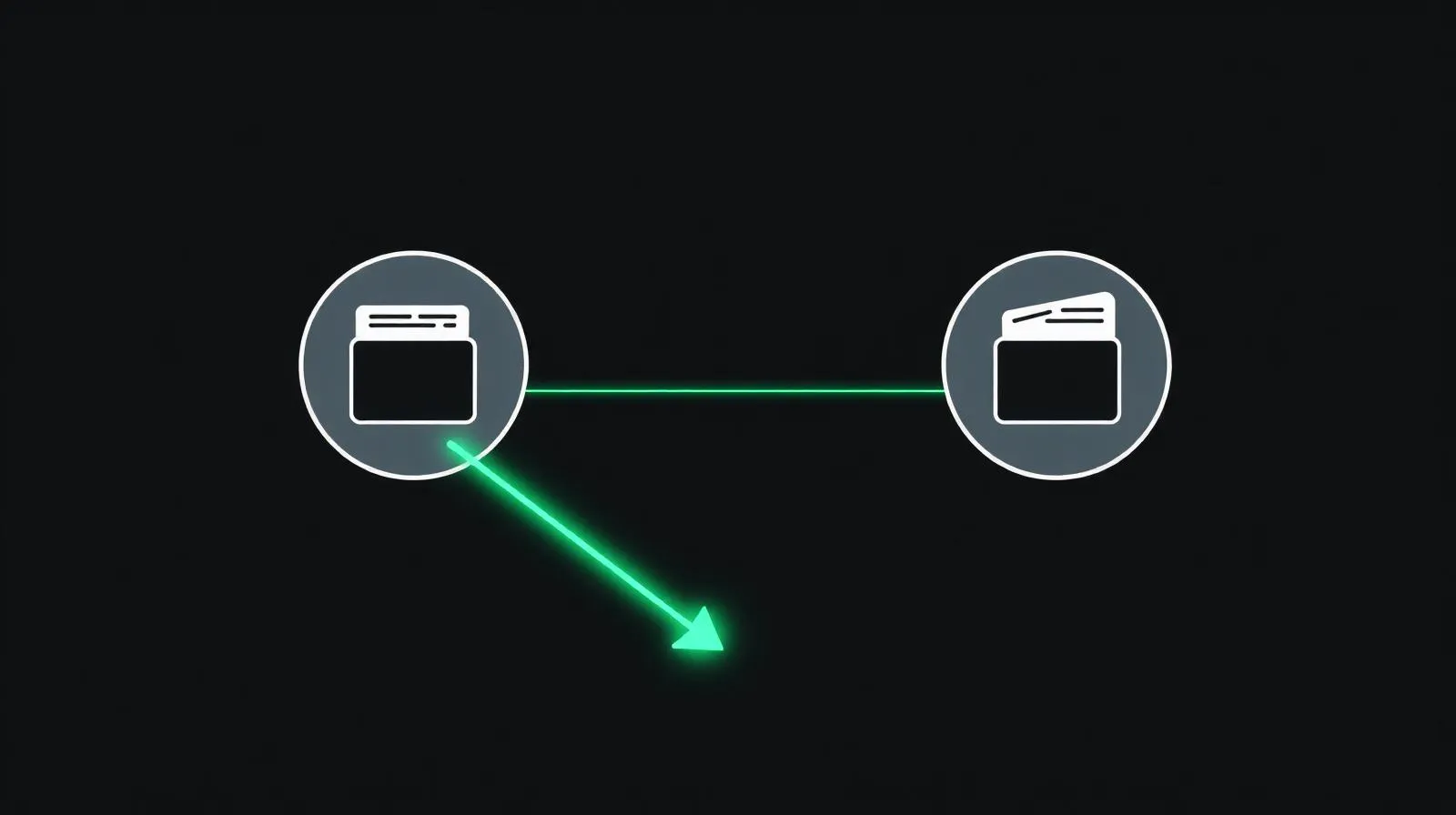
Sending Bitcoin is simple in mechanics — copy an address, enter an amount, confirm — which is exactly what makes it risky. There's no undo button. Once a transaction is confirmed on the network, it's final, regardless of whether the address was correct, the network fee was too low, or you meant to send a completely different asset.
This guide walks through how a Bitcoin transaction actually works, the specific mistakes that cause people to lose funds permanently, and a practical checklist to follow every time you send.
This article is educational. It isn't financial advice.
Executive Summary: Quick Safety Takeaways
- A confirmed Bitcoin transaction cannot be reversed — there is no central authority to appeal to.
- The address is the only thing the network checks; a correct-looking mistake still succeeds exactly as sent.
- Test small amounts first, verify the full address, and confirm you're using the correct network before sending anything significant.
- A low network fee causes delay, not loss — most wallets can bump a stuck transaction's fee.
- Prevention through careful verification is the only reliable protection; there's no dependable recovery path after a wrong-address send.
1. How a Bitcoin Transaction Actually Works
When you send Bitcoin, you're not moving a file from one place to another — you're broadcasting a message to the network stating that a certain amount, tied to your wallet's keys, should now be associated with the recipient's address instead. That message sits in a waiting area called the mempool until a miner includes it in a block. Once included, and once enough additional blocks are added on top of it, the transaction is considered confirmed and effectively permanent.
This is why a Bitcoin address, not a name or account number, is the only thing the network actually checks. If the address is correct, the transaction succeeds exactly as instructed — even if that wasn't what you meant to do.
2. Why Bitcoin Transactions Can't Be Reversed
Bitcoin has no central authority to appeal to. There's no bank that can claw back a mistaken transfer, no chargeback process, and no support line that can undo a confirmed transaction. This is a deliberate design choice — it's what makes Bitcoin resistant to censorship and central control — but it also means the responsibility for accuracy sits entirely with the sender, every time.
3. Common Mistakes That Cause Permanent Loss
- Sending to the wrong address. A single mistyped or copy-paste error sends funds to an address no one can recover from. Always verify the full address, not just the first and last few characters.
- Sending to an address on the wrong network. Some assets exist on multiple networks (for example, wrapped or bridged versions of Bitcoin). Sending native Bitcoin to an address expecting a different network's token format can result in permanent loss.
- Clipboard-hijacking malware. Some malware silently replaces a copied address with an attacker's address the moment before you paste it. This is why checking the pasted address against the original — not just trusting that copy-paste "worked" — matters.
- Underpaying the network fee. A fee that's too low for current network conditions can leave a transaction stuck unconfirmed for a long time, though it typically isn't permanently lost — most wallets offer a way to speed it up (see below).
- Sending an amount smaller than the network considers economical ("dust"). Extremely small amounts can become impractical to spend later once fees exceed the value being moved.
4. Understanding Confirmations and Network Fees
A confirmation is simply one additional block added to the blockchain after the block containing your transaction. Each additional confirmation makes it exponentially harder to reverse, which is why the number of confirmations considered "safe" scales with the value being sent:
- Small, low-stakes transactions: many services accept 1 confirmation.
- Moderate amounts: 3–6 confirmations is a common standard.
- Large transfers: waiting for 6 or more confirmations is a reasonable precaution.
Network fees work on a simple principle: miners prioritize transactions offering higher fees relative to their data size, especially when the network is busy. A low fee doesn't cause loss of funds — it simply means a longer wait. Most modern wallets let you either estimate an appropriate fee automatically or replace a stuck transaction with a higher-fee version (often called "fee bumping" or RBF — Replace-By-Fee). The Bitcoin.org "things you need to know" guide is a useful primer on how fees and confirmations behave in practice.
5. A Pre-Send Safety Checklist
Before confirming any Bitcoin transaction:
- Copy the address directly from the recipient's source — don't retype it manually.
- Compare the full address character-by-character against the source, not just the first and last few characters.
- Confirm you're sending on the correct network if your wallet or exchange supports multiple networks.
- Send a small test amount first for any new recipient or large transfer.
- Confirm the test amount arrived correctly before sending the full amount.
- Choose a fee level appropriate to how quickly you need the transaction confirmed.
- Wait for an appropriate number of confirmations before treating a large transaction as final on the receiving end.
6. What to Do If Something Goes Wrong
If a transaction is stuck (unconfirmed for an unusually long time), most modern wallets support a "speed up" or "replace-by-fee" option that rebroadcasts the same transaction with a higher fee, without needing to cancel anything.
If funds were sent to the wrong address, there is no built-in reversal mechanism. If the address belongs to a service (like an exchange), contacting their support promptly is worth attempting, but there's no guarantee of recovery. If the address belongs to an unknown wallet, the funds are generally unrecoverable. This is precisely why the pre-send checklist above matters more than any recovery step after the fact — and why self-custody responsibility starts with careful habits, not recovery tooling.
7. Frequently Asked Questions
What happens if I send Bitcoin to the wrong address?
If the address is valid but belongs to someone else (or no one), the transaction still succeeds from the network's perspective, and the funds are generally unrecoverable.
How many confirmations does a Bitcoin transaction need?
It depends on the amount and the risk you're comfortable with — commonly 1 for small transactions, 3–6 for moderate amounts, and 6 or more for large transfers.
Why is my Bitcoin transaction fee so high right now?
Fees rise when many people are trying to transact at once and network space is limited. The fee reflects current demand, not a fixed cost.
Can a Bitcoin transaction be cancelled once sent?
Not directly. If it's still unconfirmed, some wallets allow you to replace it with a higher-fee version, but this doesn't cancel the original — it supersedes it before confirmation. Once confirmed, no reversal is possible.
Is it safe to reuse the same Bitcoin address multiple times?
It's technically possible but generally discouraged for privacy reasons, since it makes it easier to link multiple transactions to the same identity. Most modern wallets generate a new address for each transaction automatically.
Conclusion
Bitcoin's lack of a reversal mechanism is a feature, not a flaw — but it means the entire burden of accuracy sits with whoever hits send. A short checklist — verify the full address, confirm the network, test with a small amount first — prevents the overwhelming majority of losses that have nothing to do with hacking or scams and everything to do with an unverified copy-paste.
Sources
- Bitcoin.org — "You Need to Know" (how Bitcoin transactions, fees, and confirmations work)
- Bitcoin Wiki — Transaction (how a transaction is created, broadcast, and confirmed)
- Bitcoin Wiki — Replace-by-fee (how stuck transactions can be superseded)
Financial Disclaimer
This article is for informational and educational purposes only and should not be considered financial or investment advice. Past performance is not indicative of future results.