
Bitcoin's September Rally Faces a New Macro Test: Oil, Yields and the Fed

Ashir Khan writes about cryptocurrency security, self-custody, macro market analysis, and regulatory policy at CryptoBeacon.
Market conditions as of September 2, 2026. This is a dated market snapshot.
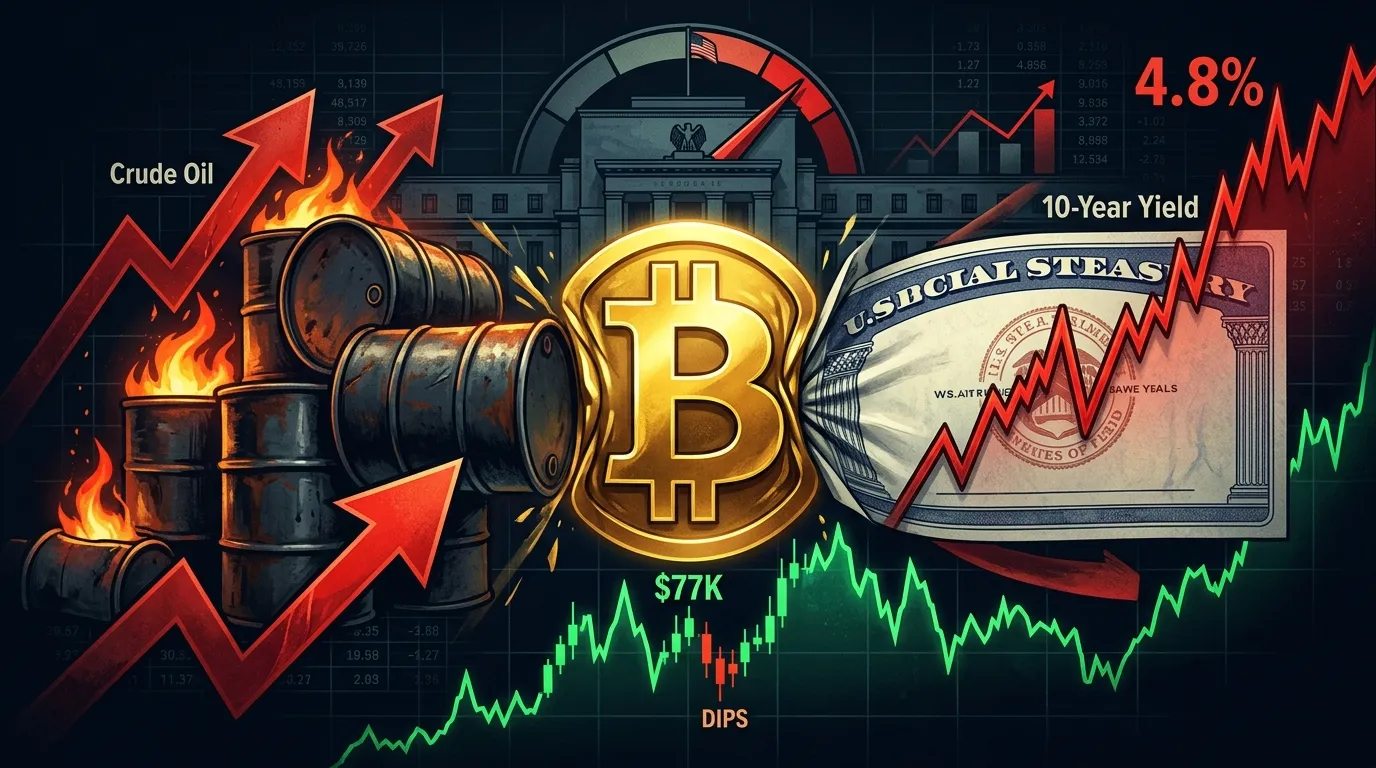
Bitcoin's impressive August rally is running into a new and multi-layered macro headwind. Brent crude has climbed to around $95–$96 per barrel. The U.S. 10-year Treasury yield has moved toward 4.8%. And market pricing for a September Federal Reserve rate hike has jumped to roughly 68%, up from about 37% just one week earlier. Bitcoin has slipped toward the $77K–$78K area as these forces converge.
But the headline-grabbing geopolitical tension — renewed U.S.-Iran friction — is not the whole story. What matters for Bitcoin and crypto markets is the transmission chain that connects a Middle East oil-supply shock to the assets in your portfolio. This article maps that chain, explains why Friday's U.S. jobs report could be the next major catalyst, and assesses whether Bitcoin's recent resilience is a sign of structural strength or a temporary pause before further downside.
The Macro Forces Weighing on Bitcoin
Geopolitical events rarely affect Bitcoin directly. Instead, they trigger a cascading sequence of macro repricing. CryptoBeacon is tracking three primary forces in early September 2026 that are increasing the opportunity cost of holding non-yielding assets:
- Rising Inflation Expectations: Energy costs are feeding through to CPI forecasts.
- Hawkish Rate-Hike Repricing: A September hike probability has jumped to ~68%.
- Climbing Treasury Yields: The 10-year yield is approaching 4.8%, strengthening the U.S. dollar.
The war or geopolitical event itself is not the direct driver of Bitcoin's price — the macro repricing is. Understanding this distinction is critical for anyone trying to assess whether the current pullback is a structural threat or a temporary headwind.
Oil Prices and Inflation: Why Brent Crude at $96 Matters
Renewed tensions between the United States and Iran have pushed Brent crude to its highest levels in months, trading around $95–$96 per barrel. Oil is the most politically sensitive commodity in the world, and its price feeds directly into transportation costs, manufacturing inputs, and consumer energy bills.
When oil prices rise sharply, they generate what economists call a supply-side inflation shock. Unlike demand-driven inflation (which the Fed can cool by raising rates), supply-side shocks present a dilemma: raising rates to combat inflation risks slowing an economy that is already absorbing higher energy costs. This tension is precisely what makes the current environment challenging for risk assets.
For Bitcoin specifically, the oil-inflation link matters because it resets market expectations about how long the Federal Reserve will maintain a restrictive monetary-policy stance — or whether it will tighten further.
Treasury Yields and the Fed: The Opportunity-Cost Squeeze
The U.S. 10-year Treasury yield has moved toward 4.8%, a level that represents a meaningful opportunity cost for non-yielding assets like Bitcoin. When investors can earn nearly 5% annually from the safest asset in the world — a U.S. government bond — the bar for allocating capital to speculative, volatile, non-yielding assets rises significantly.
The Rate-Hike Repricing
Perhaps more consequential than the current yield level is the speed of the repricing in rate-hike expectations. Federal funds futures now imply a roughly 68% probability that the Federal Reserve will raise rates at its September meeting — up from about 37% just one week earlier. That kind of rapid shift forces simultaneous repricing across:
- Bond markets — yields rise as traders sell existing bonds to reflect higher expected rates.
- Currency markets — the U.S. dollar strengthens as higher yields attract foreign capital flows.
- Equity markets — growth stocks and risk assets face higher discount rates on future cash flows.
- Crypto markets — Bitcoin competes with a rising risk-free rate while also facing a stronger dollar, which historically correlates with weaker BTC performance.
September 2, 2026 — Key Macro Data Points
- Brent crude: ~$95–$96 per barrel
- U.S. 10-year Treasury yield: Approaching 4.8%
- September Fed rate-hike probability: ~68% (up from ~37% a week earlier)
- Bitcoin: Trading in the $77K–$78K area
- Catalyst: Renewed U.S.-Iran tensions, oil-supply risk, energy-driven inflation expectations
Bitcoin's Resilience: Holding the August Rally
Despite this deteriorating macro backdrop, Bitcoin has shown notable resilience. After rallying sharply in August from the low-$60,000s to above $76,000, BTC has held much of those gains, trading in the $77K–$78K range rather than giving back the entire move.
This resilience is analytically significant. In previous cycles, sharp macro-driven repricing events — particularly those involving oil-supply shocks and rate-hike fears — have triggered more severe Bitcoin selloffs. The fact that BTC is consolidating near recent highs rather than collapsing suggests that the current buyer base may be structurally different from previous cycles, potentially reflecting deeper institutional ownership via spot Bitcoin ETFs.
That said, resilience during the early phase of a macro headwind is not the same as immunity. The true test comes if yields continue to rise and rate-hike expectations solidify further — which is precisely why Friday's jobs report is so important.
Why Friday's U.S. Jobs Report Could Be the Next Major Catalyst
The monthly U.S. non-farm payrolls report, due Friday, is now the single most important near-term data point for Bitcoin and risk assets more broadly. Here is why:
🔴 Strong Jobs Report Scenario
- Reinforces the case for a September rate hike
- Pushes 10-year yield closer to or above 5%
- Strengthens the U.S. dollar further
- Creates additional headwinds for Bitcoin and risk assets
- Could trigger a deeper retracement toward the $72K–$74K area
🟢 Weak Jobs Report Scenario
- Reduces September rate-hike probability
- Eases pressure on Treasury yields
- Weakens the U.S. dollar
- Gives risk assets — including Bitcoin — breathing room
- Could support a move back toward the $80K+ area
This binary setup means that Friday's data release is likely to produce an outsized market reaction in either direction. Traders and investors should be prepared for elevated volatility around the release, typically at 8:30 AM ET.
The Right Question Isn't "Will Bitcoin Crash?"
Much of the commentary circulating on social media focuses on a binary framing: will Bitcoin crash or not? That framing misses the nuance. The more useful question is:
"Can Bitcoin hold its recent gains while yields and rate expectations keep rising?"
This reframing matters because it shifts the analysis from event-driven panic to structural assessment. Bitcoin's ability to consolidate in the $77K–$78K range while absorbing a 31-percentage-point swing in rate-hike expectations (from 37% to 68%) is itself data. It tells us something about the composition and conviction of the current holder base.
If Bitcoin can hold the $75K–$77K support zone through the jobs report and into mid-September, it would suggest that the structural demand from ETF inflows and institutional allocation is absorbing macro-driven selling pressure. If it breaks below that zone convincingly, it would suggest that the August rally was over-extended and vulnerable to a broader macro reset.
What CryptoBeacon Is Watching
- Friday's U.S. non-farm payrolls report — the most immediate catalyst for rate-hike expectations and risk-asset positioning.
- Brent crude price trajectory — whether oil sustains above $95 or pulls back will directly influence inflation expectations and Fed calculus.
- U.S. 10-year Treasury yield — a breach above 4.8% toward 5% would signal an even more hostile environment for non-yielding assets.
- Bitcoin ETF flow data — whether institutional buyers are defending positions through inflows or stepping back with outflows will indicate conviction levels.
- The $75K–$77K support zone — a clean break below this area would shift the technical picture from "healthy consolidation" to "breakdown risk."
- U.S.-Iran developments — further escalation could push oil higher and accelerate the transmission chain described above.
Concluding Thoughts
Ultimately, the question isn't whether Bitcoin will crash, but whether it can hold the $75K–$77K support zone while these macro headwinds persist. A strong jobs report could reinforce tighter policy and push Bitcoin lower, while a weak report could provide breathing room.
Frequently Asked Questions
Why does rising oil prices affect Bitcoin?▾
Higher oil prices feed directly into broader inflation expectations. When markets anticipate faster inflation, they also price in a more aggressive Federal Reserve — higher interest rates, tighter monetary policy, and a stronger U.S. dollar. All three of these developments increase the opportunity cost of holding non-yielding risk assets like Bitcoin.
What is the transmission chain from oil to crypto?▾
The chain runs: higher oil → higher inflation risk → higher rate-hike expectations → higher Treasury yields → stronger dollar → tougher conditions for risk assets like crypto. Each link amplifies the one before it. The war or geopolitical event itself is not the direct driver — the macro repricing is.
Why does the U.S. 10-year Treasury yield matter for Bitcoin?▾
The 10-year Treasury yield is a benchmark for the risk-free rate of return. When it rises, investors can earn more from safe government bonds, which makes speculative, non-yielding assets like Bitcoin comparatively less attractive. Institutional allocators in particular weigh this opportunity cost heavily when building portfolios.
How could Friday's U.S. jobs report affect Bitcoin?▾
A strong jobs report would reinforce the case for the Federal Reserve to raise rates, which would likely push yields and the dollar higher — negative for Bitcoin in the short term. A weaker-than-expected report could reduce rate-hike expectations and ease pressure on risk assets, potentially giving Bitcoin and crypto markets some breathing room.
Has Bitcoin crashed because of these macro pressures?▾
As of September 2, 2026, Bitcoin has not crashed but has slipped toward the $77K–$78K area. Notably, it has retained much of its August rally gains, showing resilience despite the deteriorating macro backdrop. The key question is whether BTC can hold these levels as yields and rate expectations continue to rise.
What does a 68% rate-hike probability mean?▾
Federal funds futures markets allow traders to place bets on the likelihood of a Fed rate change. When these markets price a 68% probability of a September rate hike — up from roughly 37% a week earlier — it means the broad market consensus has shifted meaningfully toward expecting tighter monetary policy. This repricing itself moves yields, the dollar, and risk-asset valuations before the Fed even acts.
Sources
- CoinDesk — Bitcoin Market Coverage, September 2026
- CoinTelegraph — Macro and Crypto Market Analysis, September 2026
- Reuters — Brent Crude Oil Prices and Middle East Tensions
- CME FedWatch Tool — Federal Reserve Rate-Hike Probabilities
- FRED (Federal Reserve Economic Data) — U.S. 10-Year Treasury Yield
- Farside Investors — Bitcoin ETF Flow Tracker
Disclaimer: This article is a factual report published on September 2, 2026, for informational purposes only. It is not financial advice.