On-Chain Trading vs Exchange Trading

Ashir Khan writes about cryptocurrency security, self-custody, macro market analysis, and regulatory policy at CryptoBeacon.
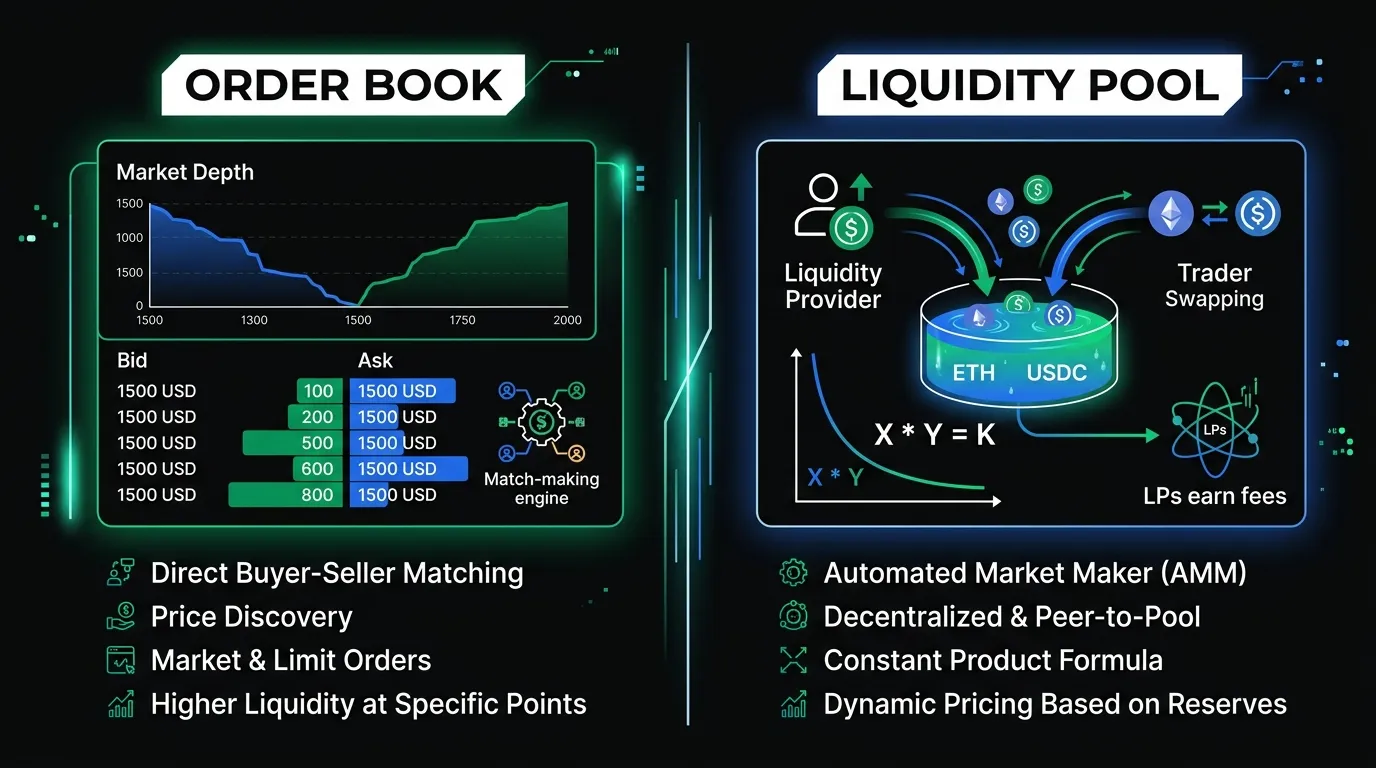
As the cryptocurrency ecosystem matures, users face a fundamental choice when buying or selling digital assets: use a centralized platform or trade directly on the blockchain. Understanding the difference between on-chain trading and using a centralized exchange (CEX) is crucial for navigating the trade-offs between convenience and security.
Centralized Exchanges (CEX)
Centralized exchanges, like Binance, Coinbase, or Kraken, operate much like traditional stock brokerages. When you deposit funds into a CEX, the exchange holds custody of your assets. When you trade, you aren't actually transacting on the blockchain; instead, the exchange updates its internal database to reflect the change in balances. This allows for lightning-fast, high-frequency trading with zero network fees.
However, the downside is counterparty risk. The infamous collapse of FTX highlighted the dangers of "Not your keys, not your coins." If the exchange goes bankrupt, halts withdrawals, or is hacked, you can lose all your deposited assets.
On-Chain Trading (DEX)
On-chain trading occurs on Decentralized Exchanges (DEXs) like Uniswap or Curve. Here, trades are executed directly on the blockchain via smart contracts. You retain full custody of your funds in a personal wallet (like MetaMask) until the exact moment the trade occurs. There is no central authority holding your funds.
While this eliminates counterparty risk, on-chain trading requires users to pay network transaction fees (gas) and take personal responsibility for securing their private keys.
Key Takeaways
- CEX trading is fast, cheap, and user-friendly, but requires surrendering custody of your assets to a third party.
- On-chain trading (DEX) allows you to maintain full control of your private keys and trade directly via smart contracts.
- On-chain trading incurs blockchain network fees and requires technical familiarity with self-custody wallets.
FAQ
Is on-chain trading more expensive?
It can be. Because every trade is recorded on the blockchain, you must pay network gas fees, which can spike during periods of high congestion.
Do I need KYC to trade on-chain?
Usually, no. Most decentralized exchanges (DEXs) do not require Know Your Customer (KYC) verification; you simply connect a non-custodial wallet and trade.
What happens if a DEX gets hacked?
If the smart contract governing the DEX is exploited, the liquidity pools can be drained. However, since you hold your own keys, assets sitting in your personal wallet are safe.
Financial Disclaimer
This article is for informational and educational purposes only and should not be considered financial or investment advice. Past performance is not indicative of future results.