Trezor Email Breach Sends Fake Wallet Alert to 347,000 Users: What to Do

Ashir Khan writes about cryptocurrency security, self-custody, macro market analysis, and regulatory policy at CryptoBeacon.
Security Incident Update
Trezor confirmed their third-party email provider, Brevo, was compromised, resulting in phishing emails sent to their newsletter subscribers. No Trezor hardware devices, wallet systems, or Trezor Suite infrastructures have been compromised.
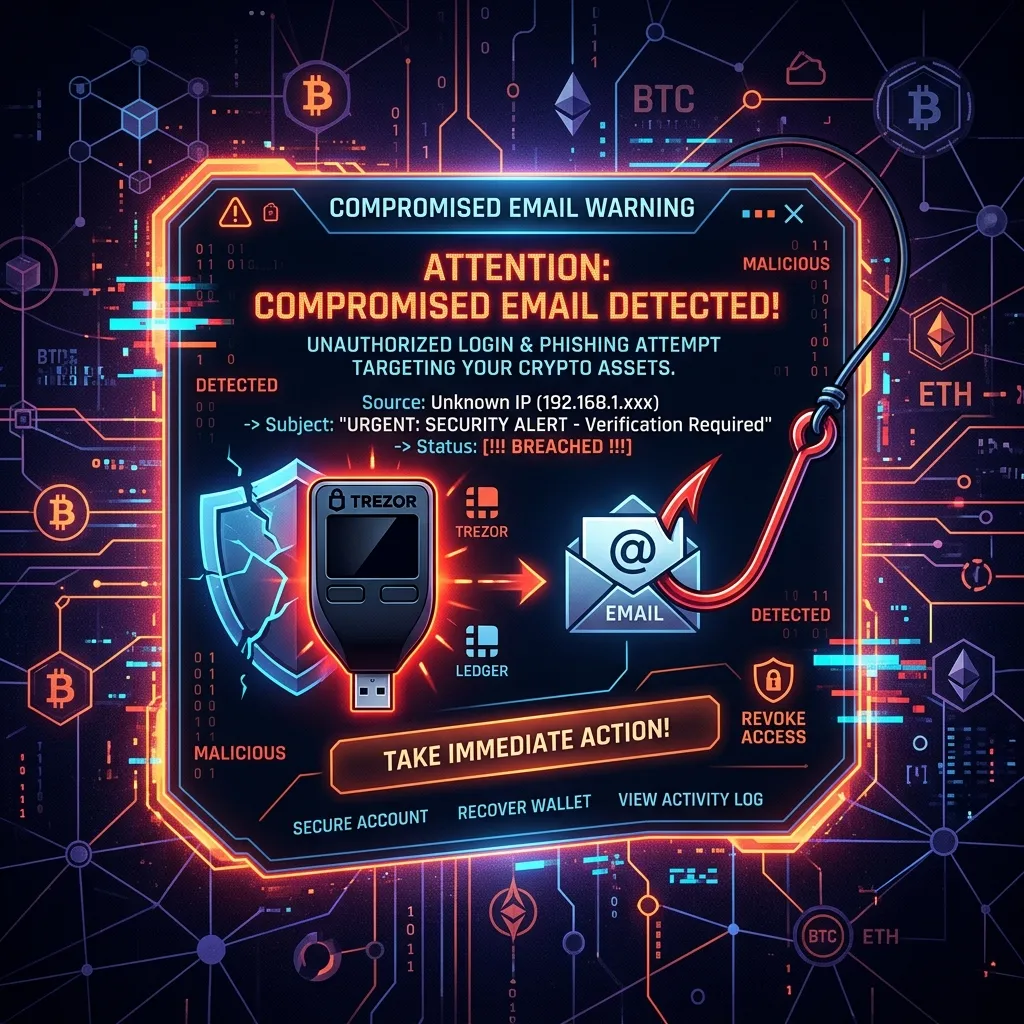
The crypto space was reminded this week that even when you strictly adhere to self-custody principles, you are not immune to sophisticated, well-coordinated social engineering attacks. On September 9, 2026, major hardware wallet manufacturer Trezor formally disclosed that an unauthorized actor gained access to its mailing infrastructure through a third-party marketing provider, Brevo (formerly known as Sendinblue). As a result, approximately 347,000 Trezor newsletter subscribers received a highly targeted phishing email designed to steal their wallet recovery phrases.
The email campaign weaponized the trust users place in Trezor by deploying a fake "Critical Security Alert." The message urged recipients to take immediate action regarding a supposed "STM32 Entropy Vulnerability." The goal was to trick users into downloading a malicious application that would prompt them for their sensitive 12, 18, or 24-word backup phrases. Despite the rapid response by Trezor to suspend the compromised Brevo account and neutralize the associated phishing domains, the incident represents a severe supply-chain breach. It serves as a stark warning to the crypto community: an email can successfully pass traditional authentication checks (like SPF, DKIM, and DMARC) and still be a malicious threat if the sender's account at a trusted third-party vendor has been compromised.
What Exactly Happened During the Breach?
This phishing incident stands out because of its high degree of credibility. Rather than relying on easily identifiable spoofed domains or generic "Dear Customer" messaging, the attackers used legitimate communication channels. Because the email was sent directly through Brevo, it bypassed most spam filters and appeared in users' inboxes looking entirely authentic. It is a textbook example of a supply-chain attack where attackers infiltrate a less secure third-party vendor to exploit the primary target's user base.
According to initial reports and independent coverage by The Token Press, Brevo experienced a security incident that involved a cross-organization Single Sign-On (SSO) authorization flaw. This vulnerability allowed the threat actors to access multiple customer accounts, with Trezor being one of the highest-profile victims. The attackers swiftly exported the subscriber list and initiated the malicious mailing campaign.
- The Compromised Provider: Brevo, a widely used third-party email service, suffered an incident that reportedly affected several customer accounts.
- The Phishing Lure: Attackers crafted a fake security alert titled "Critical Security Alert: STM32 Entropy Vulnerability," creating a false sense of urgency.
- The Malicious Payload: Users were instructed to follow a link, download a rogue application impersonating Trezor Suite, and input their recovery phrase.
- The Reach: Approximately 347,000 email addresses were exposed to this phishing risk. Some technical reporting by YFarmX suggests that around 2,500 recipients may have actually opened the malicious link, though exact financial losses remain unverified.
What Was NOT Compromised: Your Hardware Wallet
In the wake of such an attack, panic often leads to confusion. It is absolutely essential to draw a clear line between a compromised email communication channel and a compromised hardware device. Trezor has explicitly stated—and security experts agree—that no Trezor devices, core wallet systems, or the official Trezor Suite infrastructure were affected in any way.
Your physical hardware wallet remains as secure today as it was before this incident. The attackers did not breach Trezor's cryptographic security; instead, they abused a marketing tool to conduct a massive social engineering campaign. They hoped that the fear of losing funds due to the fake "STM32 Entropy Vulnerability" would prompt users to voluntarily hand over the very keys that protect their assets. The hardware wallet's entire purpose is to keep your private keys offline, and this incident did not change that reality.
What to Do if You Received the Phishing Email
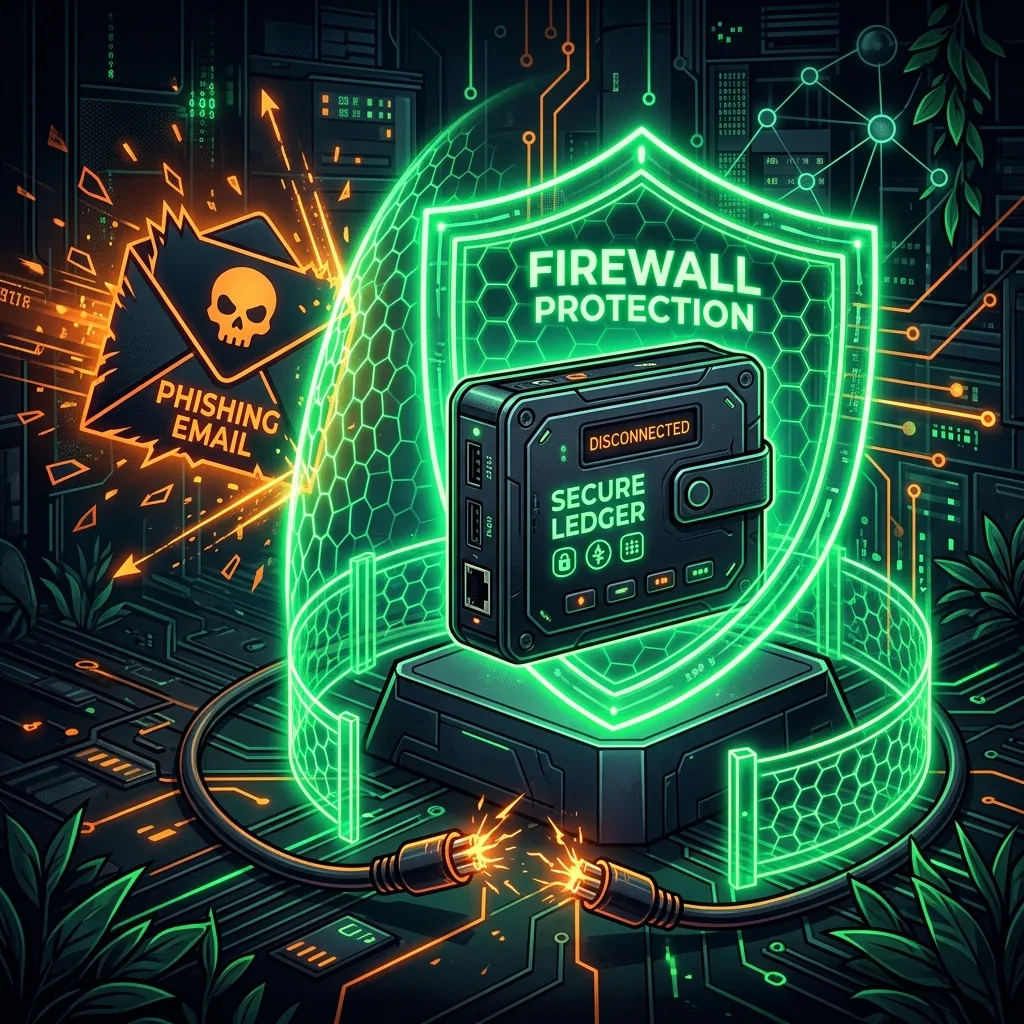
If the "Critical Security Alert" email from Trezor landed in your inbox, here is an actionable, step-by-step checklist to ensure your funds remain entirely safe:
- Do Not Click Anything: Do not interact with any links, buttons, or attachments in the email. Do not download any software it recommends. Simply delete the email immediately.
- Never Enter Your Seed Phrase on a Computer: The golden rule of crypto self-custody remains unchanged: A legitimate hardware wallet company will never ask for your recovery phrase via email, a support ticket, a website pop-up, or a software prompt on your computer. Your seed phrase should only ever be entered directly on the physical hardware device itself, using its buttons or touchscreen.
- If You Entered Your Phrase, Act Immediately: If you were tricked into entering your 12, 18, or 24-word recovery phrase into the malicious software, your funds are at imminent risk of being drained. You must immediately create an entirely new wallet with a new seed phrase and transfer all remaining funds to the new addresses before the attackers do.
- Verify Updates Manually: Always verify firmware and software updates directly through the official Trezor Suite app or by manually typing
trezor.iointo your browser. Never trust an update link sent via email.
The Bigger Picture: Supply-Chain Risks in Crypto
The Trezor-Brevo incident vividly illustrates a growing operational vulnerability within the cryptocurrency industry: supply-chain security failures. While crypto users focus heavily on protecting their private keys and avoiding smart contract bugs, they must also recognize that hardware wallet brands, major exchanges, and analytics platforms all depend on a vast network of external email, cloud hosting, and software service providers.
A security failure at any of these vendors can expose sensitive customer databases and be instantly weaponized for highly convincing phishing campaigns. This type of supply-chain attack is not isolated; we have seen similar campaigns target other wallet brands and crypto service providers through shared marketing infrastructure. This highlights why self-custody risk encompasses much more than just physical device theft—it includes vendor compromise, mailing-list exposure, fake software updates, and brand impersonation.
Consequently, crypto companies must continually strengthen their vendor-risk reviews, improve email segmentation, and enforce strict data-handling policies. For the end user, the takeaway is clear: you must adopt a "zero trust" mindset. Even if an email looks perfect and comes from a verified sender address, if it asks for your recovery phrase or prompts an unexpected software download, it is a scam.