
What Is a Short Squeeze in Crypto? Mechanics Explained

Ashir Khan writes about cryptocurrency security, self-custody, macro market analysis, and regulatory policy at CryptoBeacon.
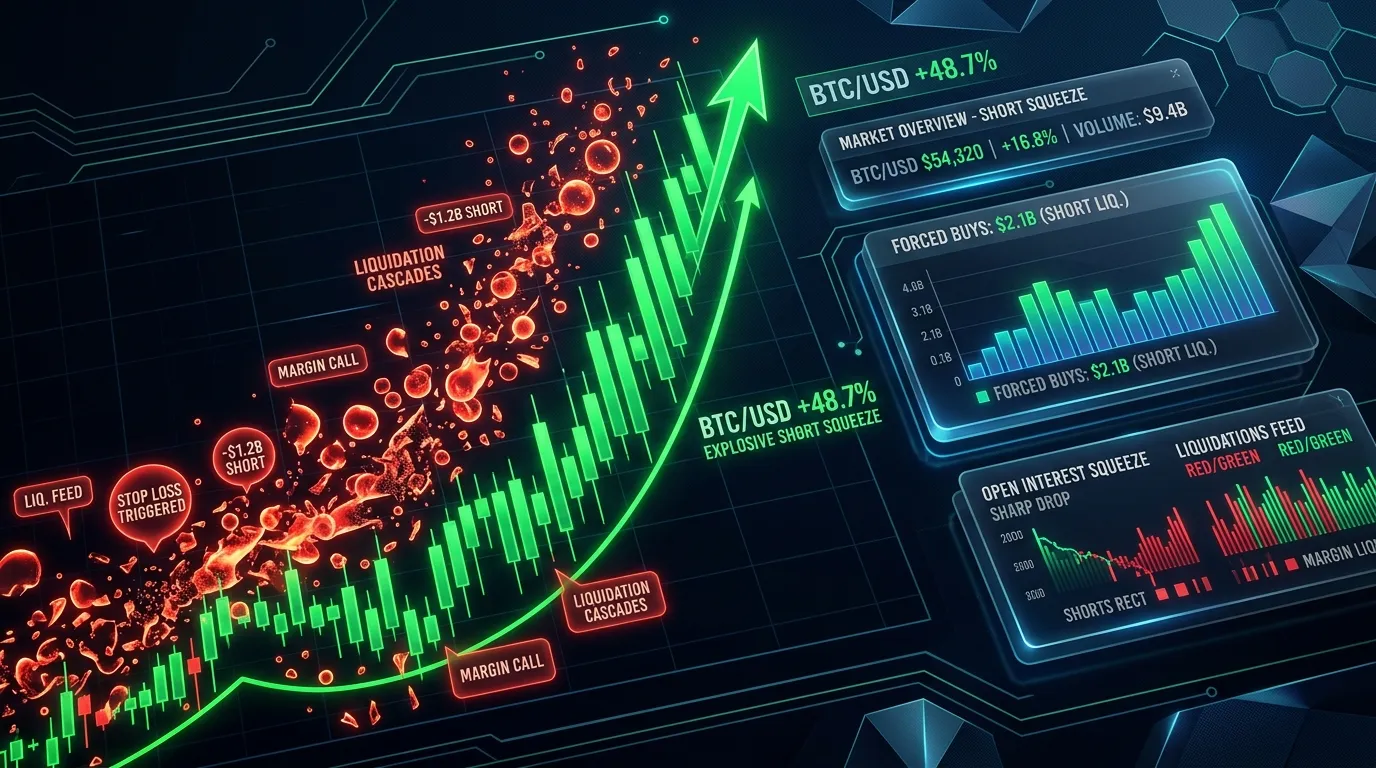
In cryptocurrency markets, rapid price movements are often blamed on fundamental factors like news announcements or regulatory decisions. However, some of the most explosive and sudden price spikes are driven by purely technical mechanics. One of the most powerful market mechanics is a short squeeze.
To understand what is a short squeeze crypto explained, you must look beneath the spot market price and examine derivatives markets, leverage, and the forced liquidations that occur when trades go wrong.
The Basics: What Is a Short Position?
To understand a squeeze, you must first understand a short position. When a trader opens a short position, they are betting that the price of an asset will fall.
In traditional finance, this involves borrowing an asset (like Bitcoin), selling it at the current market price, and hoping to buy it back later at a lower price. Once bought back, the borrowed asset is returned, and the trader pockets the difference as profit. In crypto markets, short positions are typically opened using derivatives contracts—such as perpetual futures—which settle in cash or stablecoins but replicate the same economic exposure.
Leverage, Margin, and Liquidation
Derivatives markets in cryptocurrency allow the use of leverage. Leverage means borrowing funds from the exchange to open a position much larger than the trader’s actual collateral (known as margin).
For example, a trader with $1,000 in collateral using 10x leverage can open a short position worth $10,000. While this multiplies potential profits if the asset’s price falls, it also multiplies potential losses if the price rises.
Every leveraged position has a liquidation price. Because the exchange must protect its own capital, it cannot allow a trader's losses to exceed their collateral. If the asset’s price rises and approaches the liquidation price, the trader receives a margin call to deposit more collateral. If they fail to do so, or if the price moves too quickly, the exchange triggers an automated liquidation.
The Liquidation Buy Order
To close a short position, the trader must purchase the asset back. Therefore, when an exchange liquidates a short position, it does so by automatically placing a market buy order. This forced buying occurs regardless of the trader's intent and is executed at whatever price is available in the order book.
The Mechanics of the Squeeze Cascade
A short squeeze occurs when a sudden price increase triggers a chain reaction of short liquidations. Here is the mechanical step-by-step process of how this cascade develops:
- Initial Upward Trigger: A piece of positive news or a localized spot buy order pushes the asset’s price up slightly.
- First Liquidations: The price increase reaches the liquidation threshold of highly leveraged short positions (e.g., traders using 50x or 100x leverage).
- Forced Buying: The exchange liquidates these positions by executing market buy orders.
- Price Acceleration: These market buy orders consume the available sell liquidity, driving the price higher.
- Cascading Liquidations: The new, higher price reaches the liquidation threshold of less leveraged shorts (e.g., 20x or 10x). The exchange liquidates these as well, placing even more buy orders.
This feedback loop operates independently of new buying demand from outside investors. It is an internal liquidation cascade where short positions are forced to buy, accelerating the upward momentum until the supply of short contracts is exhausted or the price reaches a level where new spot sellers step in.
Why Crypto Markets Are Highly Prone to Squeezes
Short squeezes occur in traditional stock markets (such as the famous GameStop squeeze in 2021), but they are particularly frequent and volatile in cryptocurrency for several reasons:
- High Leverage Limits: Some crypto exchanges offer leverage up to 100x or higher, meaning a price movement of less than 1% can trigger automated liquidations.
- 24/7 Market Operations: Crypto markets never close. Cascades can trigger in low-liquidity hours (such as weekends or holidays) when fewer market makers are active to absorb the buy orders.
- Fragmented Liquidity: Order books are split across multiple global exchanges. A liquidation cascade on one exchange can quickly bleed into others via arbitrage bots.
Identifying a Short Squeeze
Market analysts identify short squeezes by looking at specific derivatives metrics alongside price action:
- Open Interest (OI) Drops: Open interest measures the total number of outstanding derivatives contracts. A sharp price increase accompanied by a sharp drop in open interest indicates that existing short contracts are being closed (squeezed) rather than new buyers entering.
- Funding Rates Go Negative to Positive: Perpetual swap funding rates measure the cost of holding long vs. short positions. A sudden spike in funding rates from negative to positive shows shorts are exiting rapidly.
- High Liquidation Volume: Publicly tracked liquidation feeds will show millions of dollars in short liquidations occurring in a matter of minutes.
Frequently Asked Questions
What triggers a short squeeze in crypto?
A short squeeze is triggered when unexpected upward price movement forces traders with short positions (bets on the price falling) to close their trades by buying back the asset. This buying pressure, combined with automated exchange liquidations, creates a rapid, self-reinforcing upward price spike.
How does leverage accelerate a short squeeze?
Leverage allows traders to open larger positions using borrowed funds. However, higher leverage narrows the price window before a margin call or liquidation occurs. In volatile crypto markets, even a minor price increase can trigger automated liquidations for highly leveraged shorts, rapidly compounding buying pressure.
What is the difference between a short squeeze and a long squeeze?
A short squeeze occurs when rising prices force short sellers to buy back assets. A long squeeze is the reverse: falling prices force leveraged long buyers to sell their assets (often via liquidation), which accelerates the downward price spiral.
Sources
Financial Disclaimer
This article is for informational and educational purposes only and should not be considered financial or investment advice. Past performance is not indicative of future results.