What Is a Private Key in Crypto? A Plain-Language Explainer

Ashir Khan writes about cryptocurrency security, self-custody, macro market analysis, and regulatory policy at CryptoBeacon.
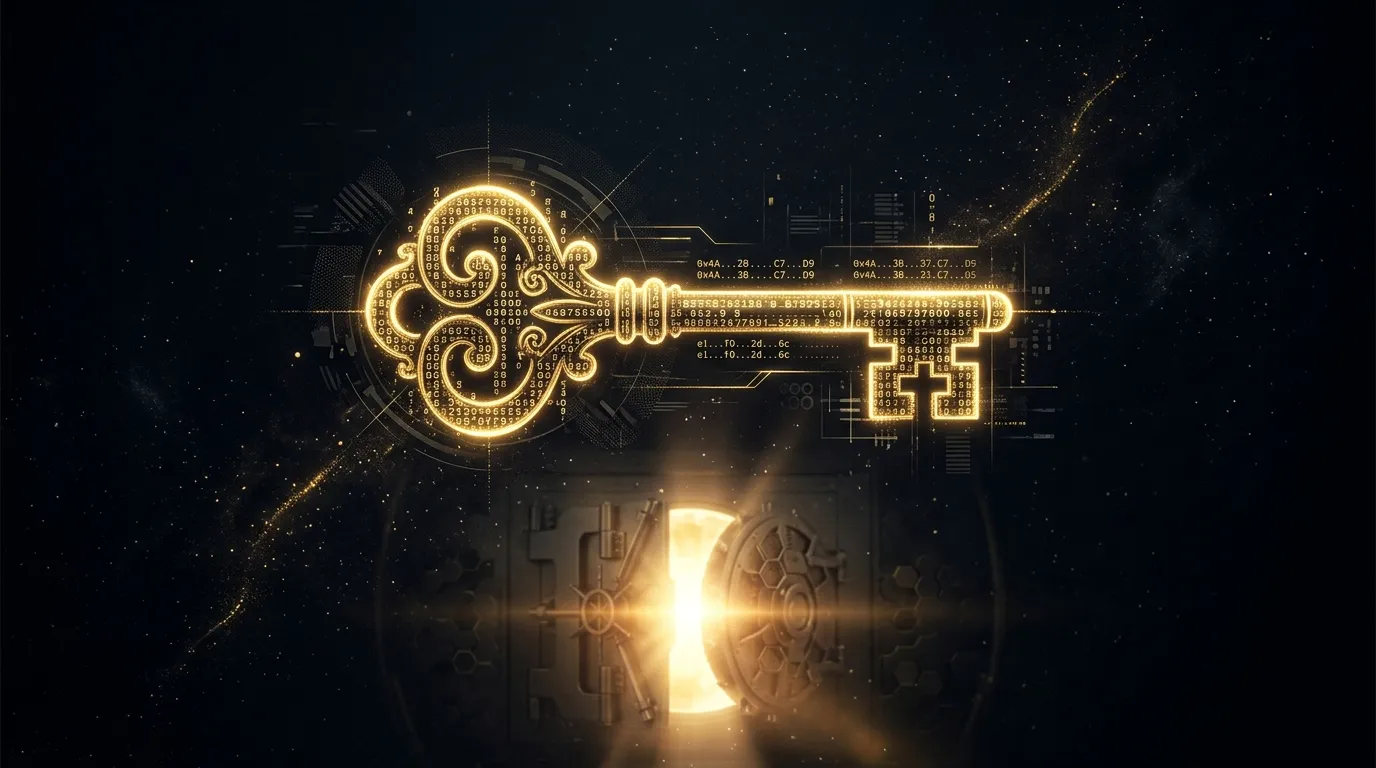
In the physical world, your money is protected by bank vaults, passwords, and legal contracts. In cryptocurrency, your money is protected by a single piece of mathematics: your private key.
Understanding what a private key is — and how it interacts with public addresses and seed phrases — is the first step toward true financial self-sovereignty.
This article is educational. It isn't financial advice.
What Is a Private Key?
A private key is a secret number that allows you to spend your cryptocurrency. It looks like a long, random string of alphanumeric characters. For example, a Bitcoin private key might look something like this:
L3W77j24kL1fW14V35vEwM7aJ6tG29fH32pS95hN41rY88dQ91xZ
You can think of it as a highly secure password. But unlike a bank password, there is no company that can reset it for you if you lose it, and no fraud department that can reverse a transaction if someone else gets ahold of it.
How It Works: Signing Transactions
Your crypto isn't actually "inside" your phone or your hardware wallet. All cryptocurrency lives on the public blockchain. What you actually hold in your wallet is the private key that proves ownership over those funds.
When you want to send Bitcoin to someone else, you create a transaction message saying "Send 1 BTC to Bob." Your wallet software then uses your private key to mathematically sign that message.
The network sees the signature, verifies that it could only have been created by the private key associated with those funds, and approves the transfer — all without ever actually revealing the private key to the network.
Private Key vs. Public Key vs. Address
Cryptocurrency relies on asymmetric cryptography, which uses pairs of keys.
- Private Key: The secret password used to sign transactions and spend funds. (Never share this).
- Public Key: Mathematically derived from your private key. It's used by the network to verify your signature.
- Wallet Address: A shorter, hashed version of your public key. This is the "account number" you give to people so they can send you money.
The math only works in one direction. You can generate a public address from a private key, but it is mathematically impossible to guess a private key just by looking at a public address.
Private Keys vs. Seed Phrases
Managing dozens of long, random alphanumeric strings is difficult for humans. That's why modern wallets use a standard called BIP39, which translates your keys into a seed phrase (usually 12 or 24 English words).
The seed phrase acts as a master key. From that one list of words, your wallet can derive thousands of individual private keys for Bitcoin, Ethereum, and other networks. When we say "secure your private keys," we usually mean "secure your 12-word seed phrase," because it controls all of them.
FAQ
Can I change my private key?
No. A private key is mathematically tied to its corresponding public address forever. If you want a new private key, you have to generate a brand new wallet and transfer your funds to the new address.
What happens if I lose my private key?
If you lose your private key (and you don't have the seed phrase backup), you permanently lose access to the funds associated with it. There is no 'forgot password' button in crypto.
Is a private key the same as a seed phrase?
No, but they are closely related. A seed phrase (the 12 or 24 words) is a master key that can generate and recover hundreds of individual private keys. Think of the seed phrase as a master password, and a private key as the password for one specific account.
Do I need to memorize my private key?
No. Private keys are usually handled in the background by your wallet software. You only need to securely store your 12 or 24-word seed phrase.
Sources
Financial Disclaimer
This article is for informational and educational purposes only and should not be considered financial or investment advice. Past performance is not indicative of future results.