Dollar-Cost Averaging (DCA) in Crypto: What It Is and How It Works

Ashir Khan writes about cryptocurrency security, self-custody, macro market analysis, and regulatory policy at CryptoBeacon.
Cryptocurrency markets are famously volatile. A 20% swing in a single week is completely normal. For new investors, this volatility is terrifying. It leads to emotional decisions: panic-buying when prices are high (FOMO) and panic-selling when prices crash.
Dollar-Cost Averaging (DCA) is a traditional finance strategy that is exceptionally effective in crypto. It removes the emotion, eliminates the need to "time the market," and mathematically reduces your exposure to sudden price drops.
This article is educational. It isn't financial advice.
What Is Dollar-Cost Averaging?
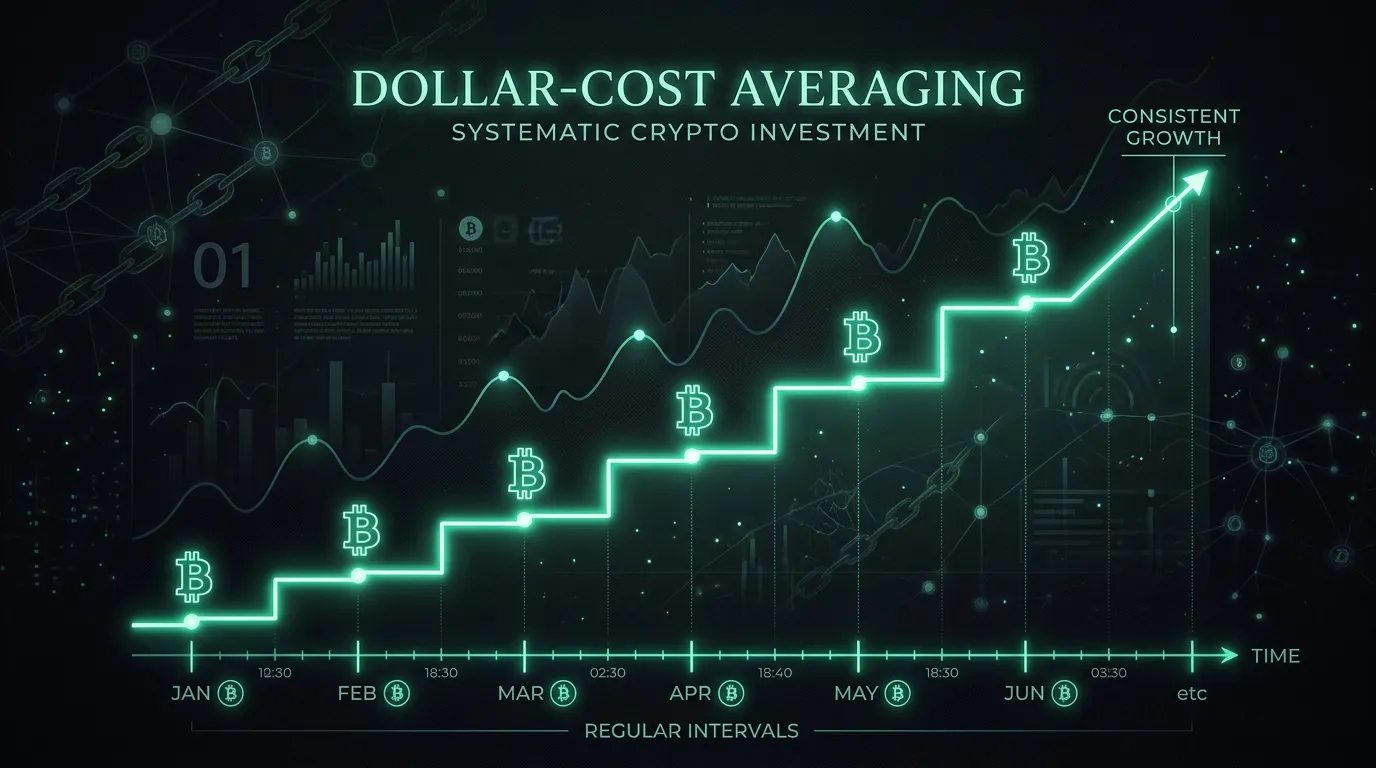
Dollar-Cost Averaging means investing a fixed amount of money at regular, predetermined intervals — regardless of what the price is doing.
Instead of taking $1,200 and trying to guess the exact right day to buy Bitcoin, you buy $100 worth of Bitcoin on the 1st of every month for a year.
- When the price is high, your $100 buys fewer coins.
- When the price is low, your $100 automatically buys more coins.
Over time, this averages out the cost of your investment. You won't catch the absolute bottom of the market, but you also won't buy the absolute top.
Why DCA Is Highly Effective in Crypto
Crypto markets are driven heavily by sentiment. When Bitcoin is at an all-time high, the news is overwhelmingly positive, making you want to buy. When it crashes, the news declares crypto dead, making you want to sell. This is the exact opposite of what a profitable investor should do.
DCA solves the psychological burden of investing:
- No more FOMO: You don't need to stress about missing a rally, because you are always accumulating.
- Crashes become opportunities: When the market drops 30%, you don't panic. You know that your next automated buy will acquire significantly more crypto for the same dollar amount.
- It's automated: It turns investing from an active, stressful daily decision into a passive background habit.
Lump Sum vs. DCA
If you suddenly receive a large amount of money (like a bonus or inheritance), should you invest it all at once (Lump Sum) or spread it out (DCA)?
Statistically, in traditional stock markets that trend upwards smoothly, lump-sum investing beats DCA about 66% of the time, simply because you have more money in the market for longer. However, crypto is different. The volatility is much more extreme.
If you lump-sum into crypto the day before a 50% market correction, the psychological toll can cause you to panic sell and take a permanent loss. DCA sacrifices some potential upside in exchange for massive downside protection and peace of mind. For most people, the mental benefit of DCA far outweighs the statistical edge of lump-sum investing.
How to Start a Crypto DCA Strategy
You don't need to manually log in and click "Buy" every Friday. Most major regulated exchanges (like Coinbase, Kraken, and Strike) have automated recurring buy features.
- Choose your asset: Typically Bitcoin or Ethereum for long-term holding.
- Choose your amount and frequency: For example, $50 every Friday. Treat it like a subscription.
- Automate it: Set up the recurring buy in your exchange app linked to your bank account.
- Self-Custody (Optional but Recommended): Once your balance grows to a meaningful amount, periodically withdraw it to your own hardware wallet to eliminate exchange risk.
FAQ
Is DCA better than buying the dip?
Mathematically and psychologically, usually yes. 'Buying the dip' requires timing the market, which even professional traders struggle to do consistently. Waiting for a dip often means you miss out on long periods of growth. DCA ensures you are constantly acquiring assets regardless of short-term noise.
How often should I DCA?
The most common intervals are weekly, bi-weekly (aligning with paychecks), or monthly. The exact interval matters less than the consistency. Choose a schedule you can afford and stick to it automatically.
Do I have to do this manually?
No. Most major crypto exchanges (like Coinbase, Kraken, and Strike) offer automated recurring buys. You set the amount and the frequency, and the exchange automatically deducts the funds from your connected bank account.
Does DCA guarantee a profit?
No. DCA is a strategy for accumulating an asset while reducing volatility risk. If the asset you are buying goes to zero, your DCA strategy will also go to zero. It works best for assets you believe have long-term structural value, like Bitcoin.
Sources
Financial Disclaimer
This article is for informational and educational purposes only and should not be considered financial or investment advice. Past performance is not indicative of future results.