Ethereum

Ethereum Layer 2 Scaling & Rollups Explained

By Elena Rostova (Lead Security Analyst) · Reviewed by CryptoBeacon Editorial8 min read
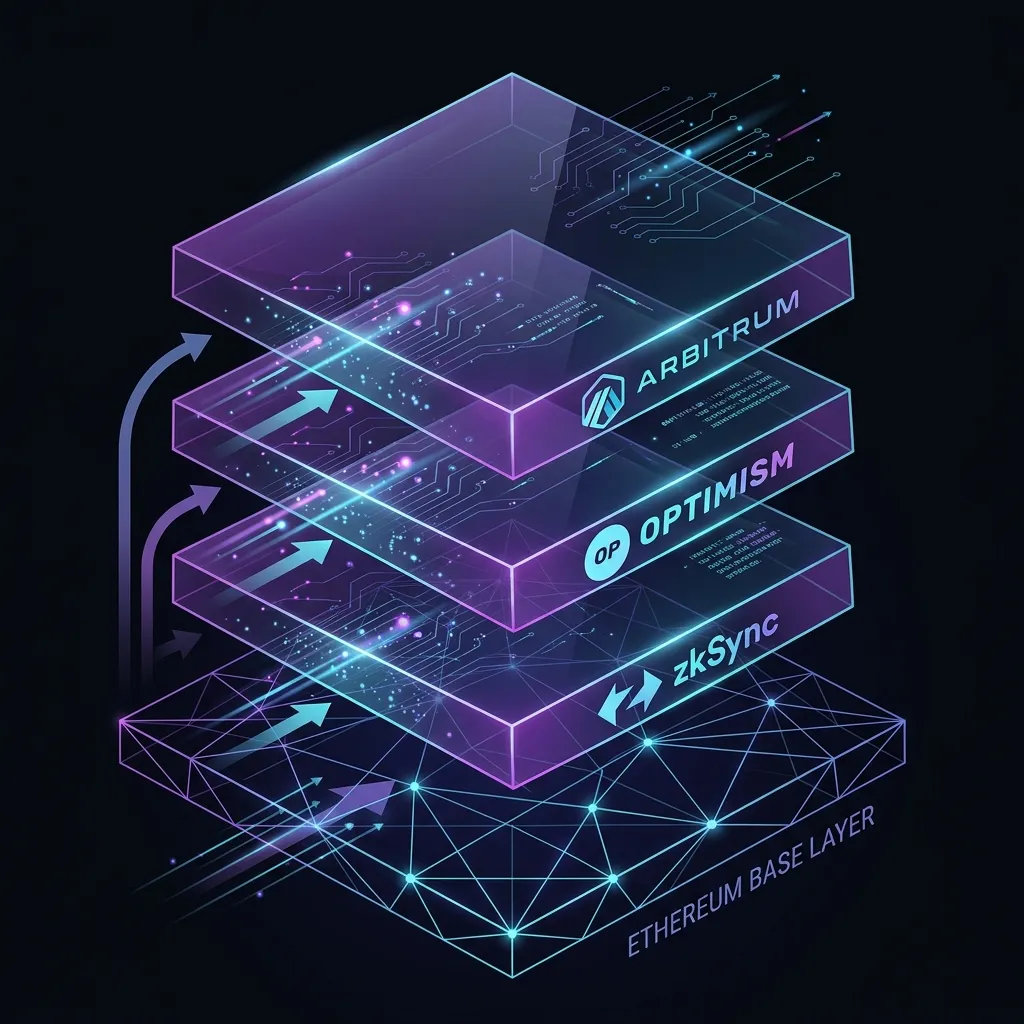
Multi-layered geometric representation of Ethereum Layer 2 rollup scaling

The Blockchain Scalability Challenge

Ethereum Layer 1 processes approximately 15 to 30 transactions per second (TPS). When network activity surges, competition for block space drives gas fees up significantly. Rather than altering base layer parameters at the cost of decentralization or node operator hardware requirements, Ethereum adopted a rollup-centric roadmap.

Layer 2 (L2) networks execute transactions off-chain in secondary execution environments while anchoring their security directly to Ethereum Layer 1 for settlement and data availability.

How Rollups Work: Optimistic vs Zero-Knowledge

Optimistic Rollups

Assume state transitions are valid by default. Transactions run off-chain and state roots are submitted to L1. A challenge window (typically 7 days) allows network participants to submit fraud proofs if invalid transactions occur. Examples include Arbitrum and Optimism.

ZK-Rollups (Zero Knowledge)

Use advanced cryptographic validity proofs (SNARKs or STARKs). Every transaction batch submitted to L1 is accompanied by a mathematical proof confirming correctness, eliminating 7-day withdrawal delays. Examples include zkSync Era and Starknet.

Proto-Danksharding (EIP-4844) & Fee Reduction

EIP-4844 introduced specialized data containers called blobs to Ethereum blocks. Blobs allow Layer 2 rollups to store transaction data on L1 at a fraction of traditional calldata costs without permanently bloating the Ethereum execution state, reducing L2 transaction costs by up to 90%.

Frequently Asked Questions

What is the difference between Optimistic and ZK Rollups?

Optimistic Rollups assume transactions are valid by default and use a dispute window with fraud proofs. ZK-Rollups use cryptographic validity proofs (zero-knowledge proofs) to instantly verify transactions mathematically on Layer 1.

Do Layer 2 networks compromise security?

Stage 2 Rollups inherit the underlying security and censorship resistance of Ethereum Layer 1 because transaction data or state commitments are posted directly to Ethereum mainnet.

Why are L2 gas fees so much cheaper than Ethereum mainnet?

L2s bundle hundreds of transactions into a single compressed batch before submitting to Layer 1, splitting the base layer gas cost among all users in the batch.