
Why Bitcoin Mining Uses So Much Energy

Ashir Khan writes about cryptocurrency security, self-custody, macro market analysis, and regulatory policy at CryptoBeacon.
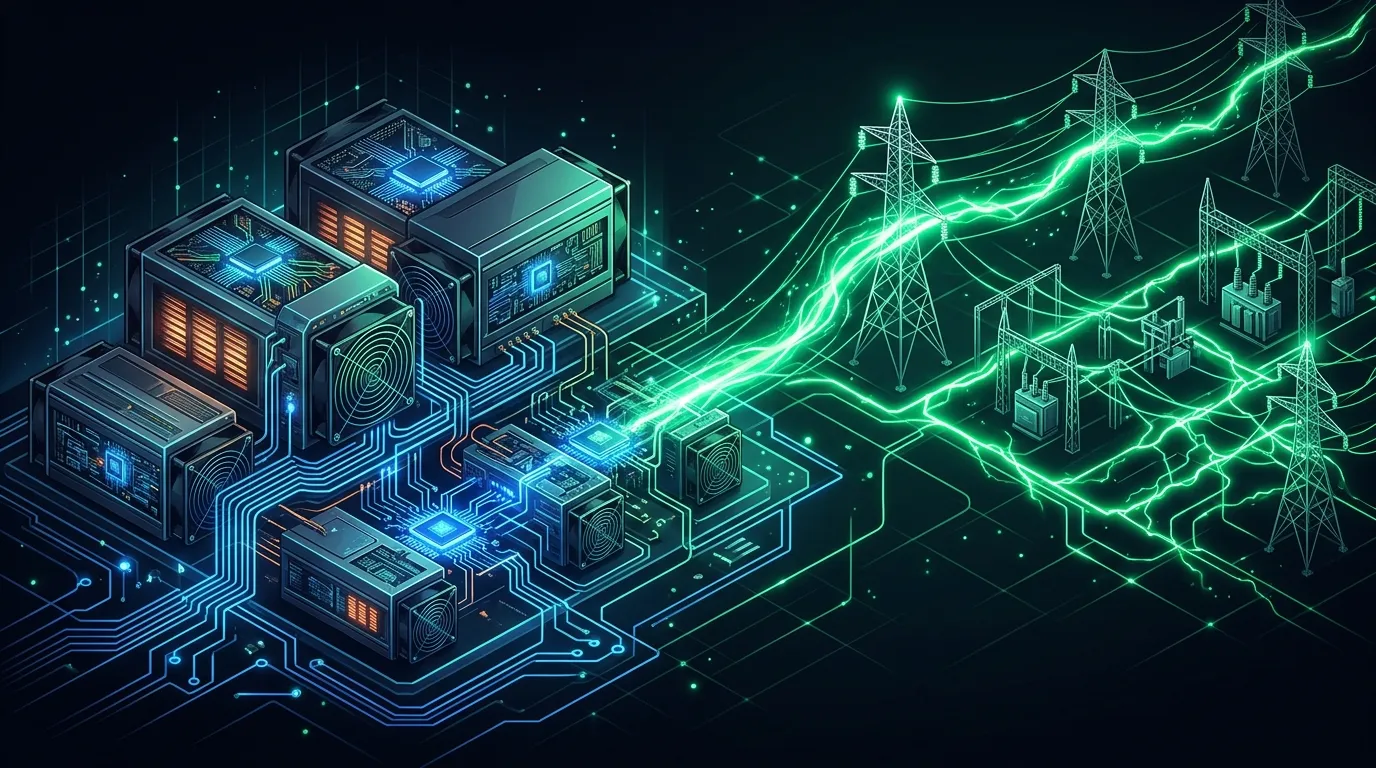
One of the most persistent criticisms of Bitcoin is its massive electricity consumption. Headlines often compare the network's energy use to that of entire countries. But why does Bitcoin mining use so much energy? It is not a bug or an inefficiency; the high energy consumption is a deliberate design choice that secures the network via a mechanism called Proof-of-Work (PoW).
The Proof-of-Work Mechanism
Bitcoin has no central bank or authority to verify transactions. Instead, it relies on a decentralized network of "miners." These miners run specialized hardware (ASICs) that compete to solve a complex cryptographic puzzle. The first miner to solve the puzzle gets the right to add the next block of transactions to the blockchain and earns the block reward (newly minted Bitcoins) plus transaction fees.
Because the reward is highly lucrative, thousands of miners globally compete constantly. The protocol automatically adjusts the difficulty of the puzzle every two weeks so that a block is solved roughly every 10 minutes, regardless of how many miners are competing. As more miners join, the puzzle gets harder, requiring more computational power, and thus, more electricity.
Security Through Energy
The energy spent is what makes Bitcoin secure. To hack the network or reverse a transaction (a 51% attack), an attacker would need to control more than half of the entire network's computing power. Given the current size of the network, acquiring the hardware and electricity to do this is practically impossible and economically unfeasible. In essence, Bitcoin converts physical energy into digital security.
Key Takeaways
- Bitcoin's energy use is a feature, not a bug; it is required by the Proof-of-Work consensus mechanism to secure the network.
- Miners compete to solve cryptographic puzzles, and as the network grows, the difficulty and energy required increase.
- This immense energy expenditure makes the network highly resistant to censorship, hacking, and hostile takeovers.
FAQ
How much energy does Bitcoin actually use?
Estimates vary, but recent estimates put Bitcoin's annual energy use in the range of 130-150 TWh, comparable to the energy usage of a small to medium-sized country like Argentina.
Can Bitcoin switch to a greener system like Ethereum did?
Technically yes, but practically no. The Bitcoin community overwhelmingly supports Proof-of-Work as the most secure, decentralized consensus mechanism and refuses to switch to Proof-of-Stake.
Is Bitcoin mining bad for the environment?
It depends on the energy source. While high energy use is a fact, an increasing percentage of mining is powered by renewables, stranded energy, or flared gas that would otherwise be wasted.
Financial Disclaimer
This article is for informational and educational purposes only and should not be considered financial or investment advice. Past performance is not indicative of future results.