What Is Bitcoin Mining? How New Bitcoin Is Created

Ashir Khan writes about cryptocurrency security, self-custody, macro market analysis, and regulatory policy at CryptoBeacon.
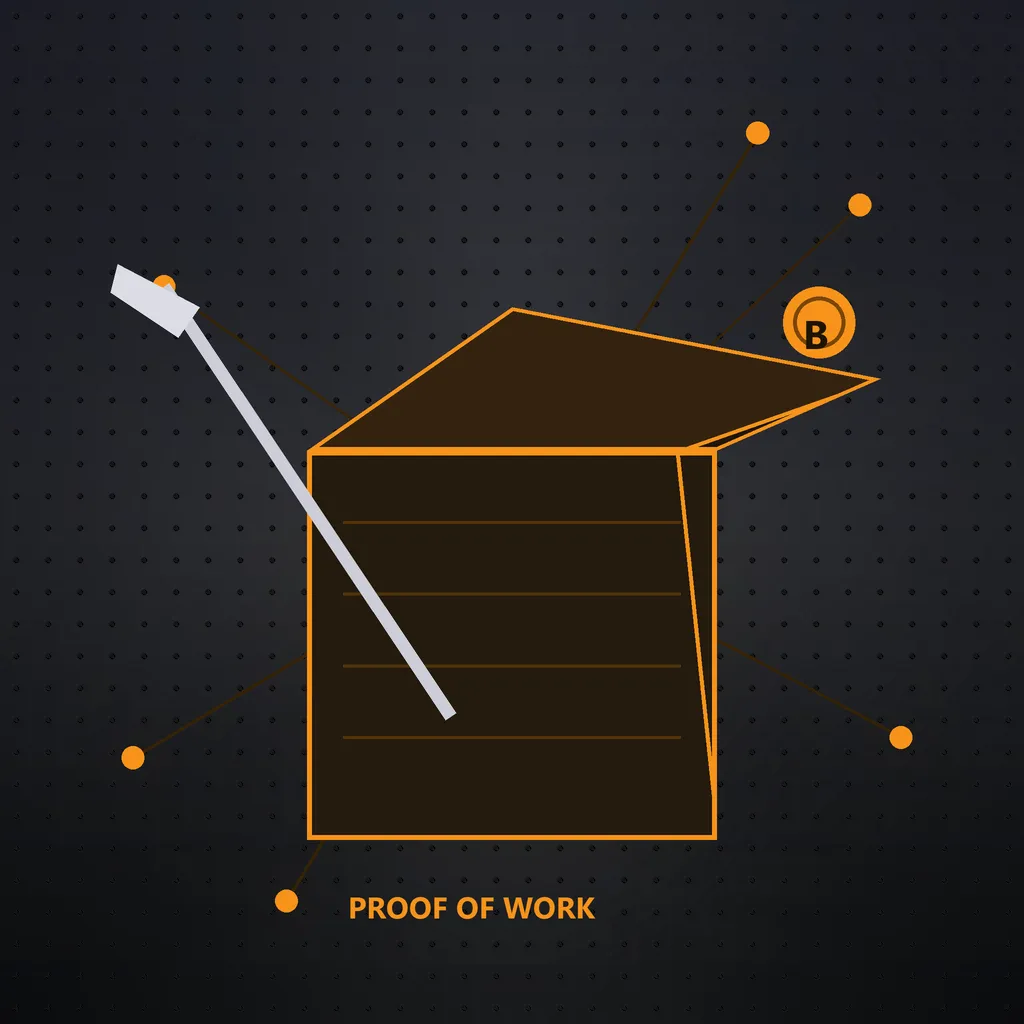
"Mining" is a deliberately evocative word — it suggests effort, scarcity, and reward. In Bitcoin's case, that's intentional: mining is the mechanism that creates new Bitcoin, processes transactions, and keeps the network secure, all at once. Understanding how it works explains a lot about why Bitcoin behaves the way it does.
This article is educational. It isn't financial advice.
1. What Mining Actually Does
When you send Bitcoin, your transaction is broadcast to the network but doesn't immediately become permanent. It sits in a waiting area called the "mempool". Miners collect these pending transactions into a candidate block, verify that all senders actually have the funds they are trying to send (preventing the "double-spend" problem), and then compete to add that block to the official blockchain.
The winner of this competition earns a reward consisting of two parts: newly created Bitcoin (the block reward) plus all the transaction fees paid by the users whose transactions were included in the block. This block reward is the only way new Bitcoin enters circulation.
Mining serves two distinct functions simultaneously: it acts as a decentralized clearinghouse to process and finalise transactions, and it enforces the rules of the network (like the 21 million supply cap) without requiring any central bank or corporate authority to oversee it.
2. Proof of Work: The Core Mechanism
To add a block to the chain, a miner must solve a specific computational puzzle. They take the data in their candidate block, add a random number (called a nonce), and run it through a cryptographic hash function (SHA-256). The goal is to produce an output hash that starts with a certain number of zeros (i.e. below a specific target value).
Because hash functions are unpredictable, there's no mathematical shortcut or formula to solve it — the only method is brute-force guessing at enormous speed. Today's specialized mining machines (ASICs) can generate trillions of guesses per second.
This system is called proof of work. The name reflects its key property: you can verify a correct solution instantly (with one simple calculation), but producing that solution requires real, measurable computational effort and electrical energy. This physical cost is what makes the system hard to cheat — rewriting Bitcoin's history would require an attacker to expend more computing power and electricity than the rest of the honest network combined, which is prohibitively expensive in practice.
3. Difficulty Adjustment and Fixed Supply
If mining gets more profitable, more miners turn on their machines. If the total computing power (hash rate) of the network increases, blocks would naturally be solved faster than the 10-minute target. To prevent this, Bitcoin's protocol automatically adjusts the puzzle's difficulty roughly every two weeks (every 2,016 blocks). As more miners join, the puzzle gets mathematically harder. If miners leave and hash rate drops, the puzzle gets easier. This brilliant self-regulating mechanism ensures a steady issuance of blocks regardless of how much hardware is deployed.
Because the block time is kept steady at 10 minutes, the issuance schedule of new coins is entirely predictable. Bitcoin's total supply is hard-capped at 21 million coins — a rule enforced by every node on the network. No government, CEO, or developer can simply "print" more Bitcoin. The predictable, mathematically enforced rate at which new Bitcoin is issued is the foundation of its monetary policy and scarcity.
4. The Halving
Every 210,000 blocks (approximately every four years), the block reward paid to miners is cut in half — an event known as the halving. This is how Bitcoin's supply schedule becomes progressively more restrictive over time. The block reward started at 50 BTC, is currently 3.125 BTC (the rate set by the April 2024 halving), and will continue halving until all 21 million Bitcoin have been issued, around the year 2140.
After all Bitcoin has been mined, miners will rely entirely on transaction fees for income. Whether this creates sufficient economic incentive to sustain the network's security long-term is an ongoing debate among researchers and participants.
Frequently Asked Questions
Can anyone mine Bitcoin?
Technically yes, but in practice individual mining with a consumer computer is no longer economically viable. Bitcoin mining today is dominated by specialised hardware (ASICs) and large operations with access to cheap electricity.
What is a Bitcoin halving?
Approximately every four years (every 210,000 blocks), the block reward paid to miners is cut in half. This reduces the rate at which new Bitcoin enters circulation and is part of Bitcoin's fixed supply design.
Why does Bitcoin mining use so much energy?
Energy use is intentional — it's what makes attacking the network costly. Producing a valid proof-of-work requires real computational effort, which means reversing it or creating a fraudulent chain also requires enormous resources.
What happens when all Bitcoin has been mined?
The last Bitcoin is expected to be mined around 2140. After that, miners will only earn transaction fees rather than block rewards. Whether that's economically sufficient to sustain the network is an open long-term question.
Conclusion
Bitcoin mining is not just about creating new coins — it's the engine of the entire network's security and transaction finality. Proof of work, difficulty adjustment, and the halving schedule all work together to produce a system where supply is predictable, history is expensive to rewrite, and no central party controls issuance. Understanding these mechanics explains much of what makes Bitcoin's design distinct from traditional financial systems.
Sources
- Bitcoin Wiki — Mining (how mining works technically)
- Bitcoin Wiki — Controlled Supply (Bitcoin's fixed supply schedule and halvings)
- Bitcoin Whitepaper — Satoshi Nakamoto (original design document)
Financial Disclaimer
This article is for informational and educational purposes only and should not be considered financial or investment advice. Past performance is not indicative of future results.